More Than a Kitchen Garden: The Art of the Head Gardener

Updated: 7 days ago
One garden, many skills, and a tradition worth carrying forward.
There was a time when the kitchen garden was at the heart of a country estate. Within its walls, the Head Gardener oversaw a world of growing and cultivation, bringing together vegetables, herbs, fruit, flowers and an understanding of the plants that sustained both the household and the wider garden.
It was a place of productivity, but also of knowledge, craftsmanship and creativity. Every plant had its place, every season brought its own work, and the garden was never simply about what could be harvested. It was a living system, tended with skill and shaped by the changing rhythms of the natural world.
It is this broader idea of the kitchen garden that inspires me.
One Garden, Many Pursuits
Today, we often separate gardening into distinct interests. We grow vegetables for the kitchen, flowers for the home, herbs for cooking and plants for their beauty. Art belongs in the studio, while growing belongs outside.
But I am drawn to the idea that these things can exist together, as parts of one connected whole.
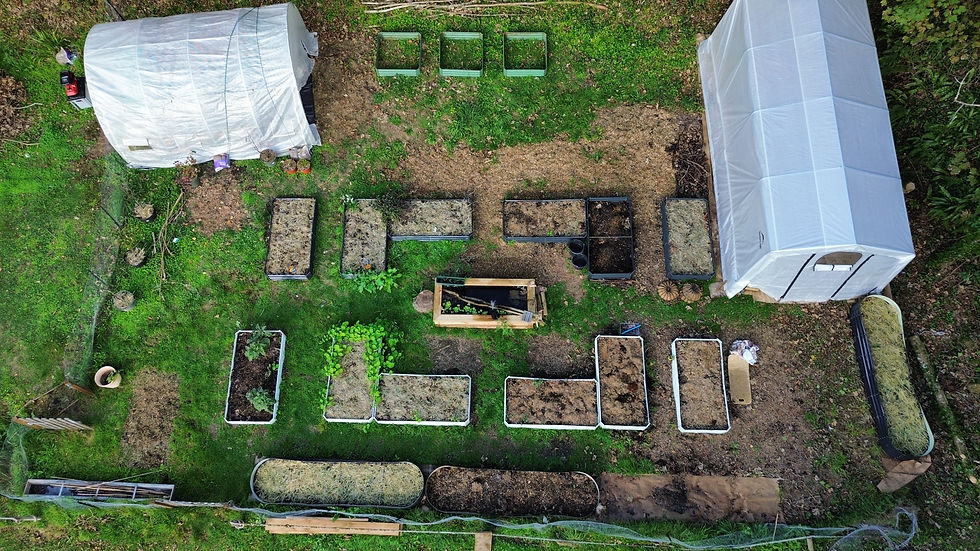
At The Kitchen Garden, heritage vegetables and traditional herbs sit alongside a garden of seasonal cut flowers. The plants themselves inspire botanical observation, watercolour and the delicate art of pressed flowers. In time, I hope to explore houseplants and other forms of cultivation, continuing to learn about the remarkable ways plants grow, adapt and thrive.
These are not separate projects brought together under one name. They are different expressions of the same interest: a fascination with plants, the knowledge required to cultivate them, and the many useful and beautiful things that can grow from a garden.
This is the spirit of the Head Gardener I want to carry forward — a broad, practical understanding of the garden, where usefulness and beauty are equally valued.
Working with Nature
The traditions of the past offer inspiration, but the way we garden must also reflect what we understand today.
For me, that means working with nature rather than trying to control it. It means caring for the soil, encouraging wildlife, growing without synthetic pesticides, and choosing methods that help build a healthier, more resilient garden over time.
It also means growing with the seasons rather than expecting the garden to provide everything at once. There is value in learning when to sow, when to wait, when to gather and when to leave a plant undisturbed. Not everything needs to be hurried, and not every part of a garden needs to be productive in the same way.
A thriving garden is more than the sum of its harvests. It depends on the relationships between soil, plants, insects, weather and the people who tend it. The more we observe these relationships, the more there is to learn.
I want this understanding to shape everything that comes from The Kitchen Garden, from the varieties I choose to grow to the way I work with the land.
Learning Through the Seasons
A garden teaches in ways that cannot always be found in a book. A seed may germinate differently than expected. A plant may thrive in one position and struggle in another. Weather can change the course of a carefully made plan, and sometimes the most useful lessons come from the things that do not go as intended.
I believe there is value in this process of observation, experimentation and gradual understanding. The aim is not to know everything from the beginning, but to keep learning, season after season, and to build knowledge through the daily work of tending a living garden.
This is also where creativity finds its place. Looking closely at a leaf, the structure of a flower or the changing form of a seed head can reveal details that might otherwise go unnoticed. Growing and making become part of the same practice: one teaches us to observe, and the other gives us a way to explore what we see.
The garden is not simply a source of materials for creative work. It is the inspiration, the subject and the place where that work begins.
A Living Tradition
The Kitchen Garden is an evolving project, and there is much still to grow.
My ambition is to build a sustainable livelihood around the garden and the skills it develops: sharing the vegetables, herbs and flowers it produces, alongside botanical creations inspired by the plants themselves. Over time, I hope to develop this into something enduring, shaped by the seasons and grounded in a genuine connection with the natural world.
I am not seeking to recreate a Victorian kitchen garden exactly as it once was. Instead, I want to take the spirit of that tradition — its breadth of knowledge, its practical craftsmanship and its understanding of the garden as a connected whole — and interpret it for the present.
That means allowing the project to develop naturally, discovering what grows well, learning new skills and making room for ideas that emerge along the way.
There is no need for every part to be established at once. A garden takes time, and so does the knowledge needed to tend it well.
For now, the work continues one plant, one season and one skill at a time.
The Kitchen Garden is a modern interpretation of the Victorian Head Gardener's world, where growing and creativity belong together, and where the garden itself remains at the heart of everything.


Comments